Oxide-Free Joints:
Since the process occurs under vacuum, no oxides form on the surfaces of the components. This results in exceptionally clean and high-quality brazed joints without contamination.

Vacuum brazing is an advanced process for joining metals that takes place in an oxygen-free environment. This method offers several advantages over conventional brazing techniques, particularly in terms of the quality, purity, and strength of the joints. Due to these properties, vacuum brazing is widely used in high-tech industries such as aerospace, electronics, and medical technology.
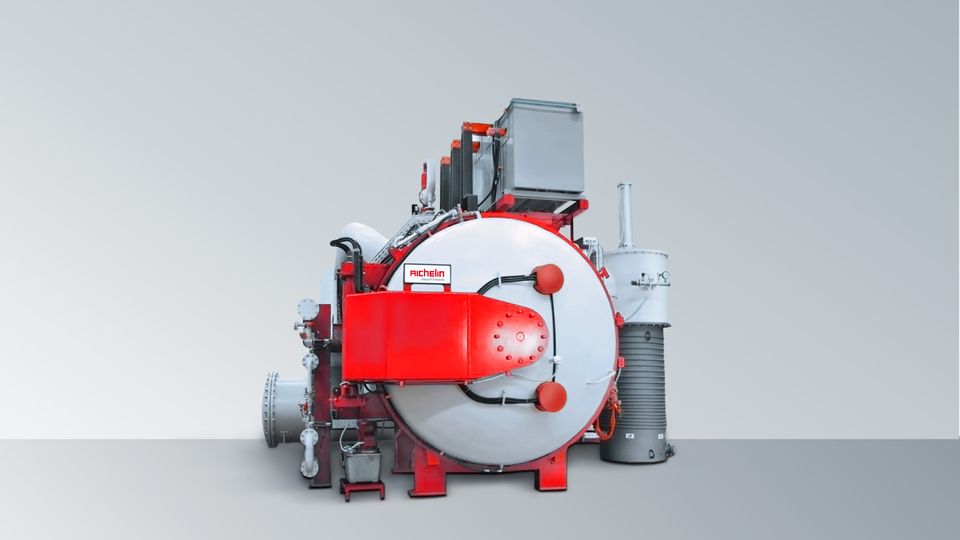
In vacuum brazing, metal components are heated under vacuum conditions to a temperature that melts the brazing filler metal (liquidus temperature) without requiring a protective atmosphere, as in other brazing methods. The vacuum prevents oxide formation on the surfaces of the materials to be joined, resulting in a clean, strong bond without residues.
The brazing process involves three steps:
Preheating and Evacuation: The components to be brazed are placed in a vacuum chamber, where the air is removed to create a high vacuum. Preheating minimizes stresses in the materials.
Heating to Brazing Temperature: The temperature is gradually raised to the melting point of the filler metal (liquidus temperature). The filler metal melts and flows into the joints between the components through capillary action.
Cooling in Vacuum: After the brazing process, the temperature is lowered, and the components cool in the vacuum (solidus temperature). Controlled cooling ensures that the bond solidifies evenly, resulting in high mechanical strength.
Vacuum brazing offers numerous advantages over traditional brazing techniques, primarily due to the oxygen-free environment and precise temperature control during the process.
While vacuum brazing offers many advantages, there are also challenges and limitations to consider:
Cost: Setting up and operating vacuum furnaces requires significant investment, making this method more expensive than other brazing techniques. However, the higher costs are often offset by the quality of the end products.
Size Limitation of Components: Since vacuum brazing is performed in a vacuum chamber, the size of the components that can be processed is limited by the dimensions of the vacuum furnace.
Experience and Expertise: Conducting vacuum brazing requires a high level of technical knowledge and experience to optimize process parameters and achieve the best results.
Vacuum brazing is an indispensable process in a vaccum brazing furnace for creating joints that meet the highest standards of strength, purity, and precision. The oxygen-free environment and precise control of temperatures and cooling rates result in high-quality brazed joints that are essential for demanding applications in aerospace, medical technology, electronics, and the automotive industry. Despite the higher costs and technical challenges, vacuum brazing delivers unparalleled quality that traditional brazing methods often cannot achieve.
Do you have questions about our company, locations, or partnerships? We look forward to your inquiry and will get back to you promptly.