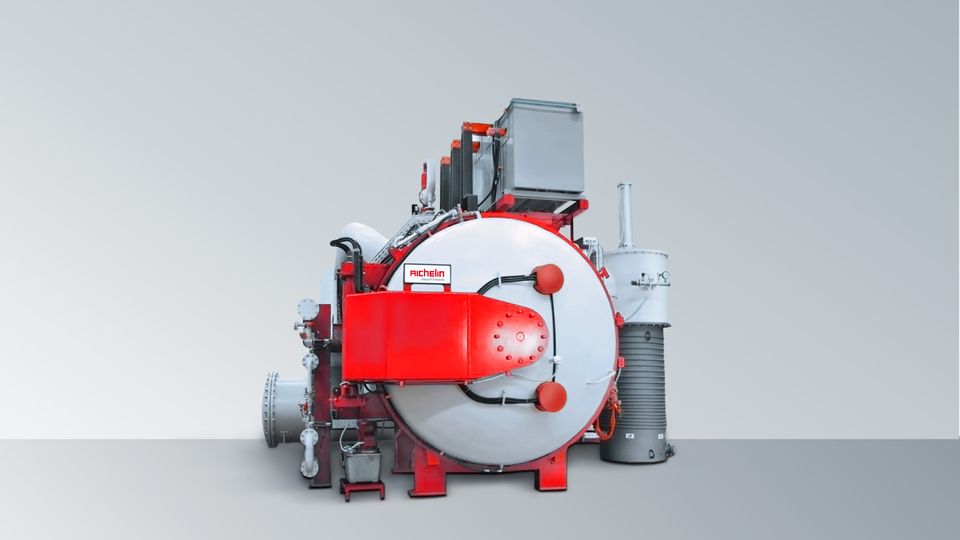
In vacuum heat treatment, a metal often steel is heated to a specific temperature in an airtight vacuum furnce and then cooled in a controlled manner. This thermal process allows precise control of the material's physical and mechanical properties. Unlike traditional methods, where oxygen often plays a role and surface oxides form, the metal in the vacuum furnace remains clean and free from contaminants.
Steps of Vacuum Heat Treatment
Heating in Vacuum: The metal is heated to a precisely defined temperature in an oxygen-free atmosphere. Depending on the desired outcome and material, the workpiece is heated to temperatures ranging from 600°C to 1300°C.
Soaking: The temperature is held constant for a specified period to achieve the desired changes in the material's microstructure.
Quenching: The metal is then cooled in a controlled manner, often through gas quenching, to influence the hardness and other mechanical properties of the workpiece. The quenching medium can vary depending on requirements—typically nitrogen or another inert gas is used.